• From Burnout to Breakthrough: Why Your Crisis Might Be God’s Preparation Room
    heroImage

    By Eleanor Haack-Finney

    You’re exhausted. The weight of responsibilities feels crushing. Every day blends into the next, and you’re running on fumes. If this describes your current reality, you’re not alone—and you’re not forgotten. What if I told you that this season of burnout might actually be God’s preparation room for your next breakthrough?

    As someone who’s walked through the valley of overwhelming stress and emerged with deeper faith and purpose, I want to share a perspective that completely transformed how I view life’s most challenging seasons. Your crisis isn’t punishment—it’s preparation.

    Recognizing God’s Preparation Process

    The spiritual truth that often gets overlooked in our achievement-driven culture is this: God’s delays aren’t denials; they’re development opportunities. What feels like the most inactive season of your life might actually be the most active season of preparation happening beneath the surface.

    Think about Joseph in the pit, David hiding in caves, or Jesus spending 40 days in the wilderness. Each of these “setback” seasons was actually strategic preparation for what God had planned next. Your burnout season might be following the same divine pattern.

    When we’re in the thick of crisis, isolation and overwhelm make us feel like we’re carrying everything alone. But here’s the breakthrough perspective that changes everything: God is with you and surrounds you with the right people. This shift from feeling abandoned to feeling supported fundamentally transforms how you experience and navigate your current challenges.

    image_1

    The Four Pillars of Sacred Resilience

    Moving from burnout to breakthrough isn’t just about pushing through—it’s about building what I call “sacred resilience” through four essential pillars that either fuel or drain your energy:

    HEAD: Renewing Your Mind

    Your thought patterns directly affect every aspect of your energy and faith. Crisis often forces us to examine limiting beliefs that have been holding us back. Romans 12:2 reminds us to “be transformed by the renewing of your mind.”

    During my own burnout season, I discovered I’d been operating under the lie that my worth was tied to my performance. God used that exhausting season to help me rebuild my identity on His truth instead of my achievements. What lies might your crisis be exposing?

    HEART: Emotional Wisdom

    Emotions aren’t the enemy—they’re messengers. The preparation room of crisis teaches emotional regulation and deeper self-awareness. Instead of pushing through pain, God often uses difficult seasons to develop our emotional intelligence and empathy for others who are struggling.

    Learning to feel your feelings while filtering them through faith becomes a superpower for future ministry and relationships. Your current emotional journey is preparing you to comfort others with the comfort you’ve received (2 Corinthians 1:4).

    HANDS: Taking Right Action

    Beyond thinking and feeling, breakthrough requires doing. As Carl Jung observed, “Often the hands will solve a mystery that the intellect has struggled with in vain.” Crisis often compels us toward actions we wouldn’t have taken otherwise—setting boundaries, seeking help, or stepping into new areas of service.

    Sometimes God allows us to reach the end of our own strength so we’ll finally take the steps toward the life He’s been calling us to all along.

    HUMOR: Finding Joy in the Journey

    This might seem impossible when you’re burned out, but learning to find lightness even in darkness becomes crucial resilience skill. Nehemiah 8:10 reminds us that “the joy of the Lord is your strength.”

    Joy isn’t happiness that depends on circumstances—it’s the deep knowledge that God is working all things together for your good, even when you can’t see the full picture yet.
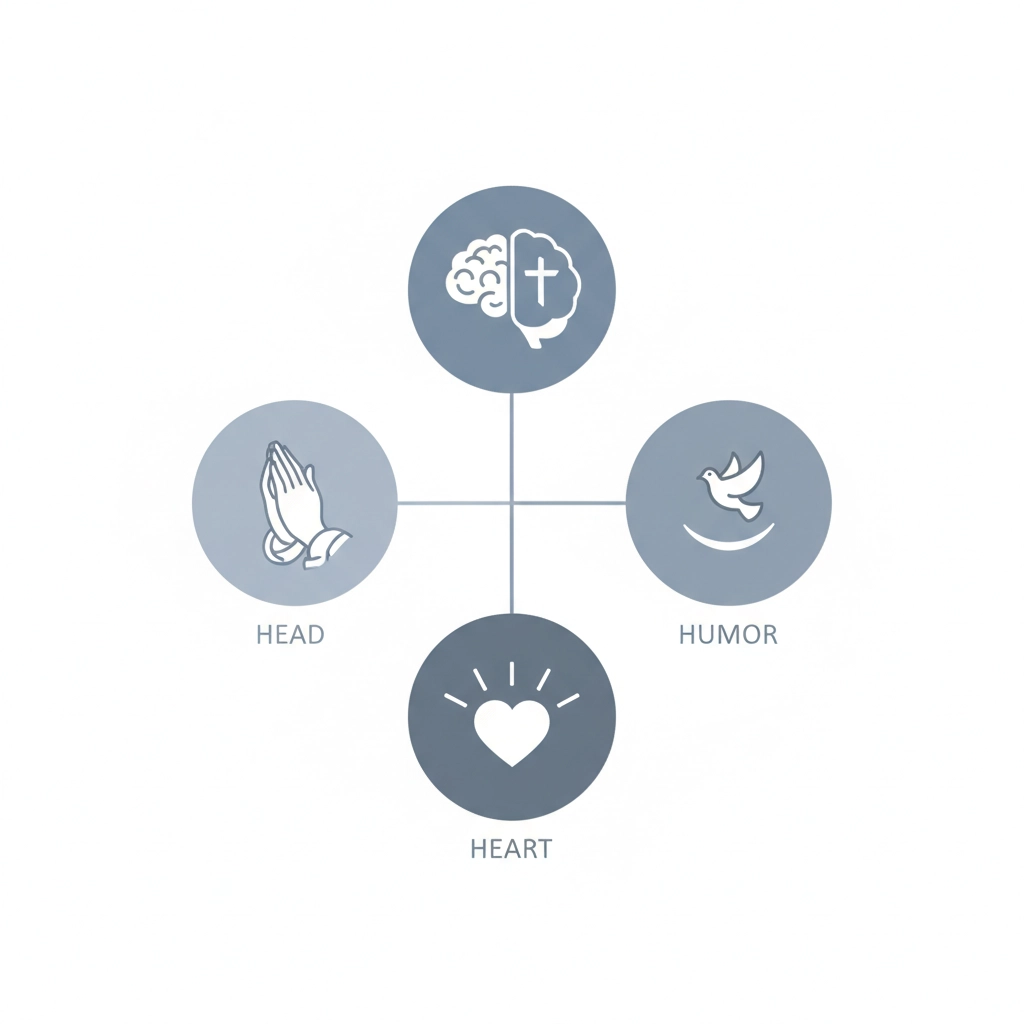
    image_2

    The Transformation Timeline: What to Expect

    Breakthrough happens when you build resilience skills and realign your energy with God’s purposes. This isn’t about simply bouncing back to where you were before—that would just lead to another burnout. Instead, it’s about growing through the difficulty to reach a better place entirely.

    Like building spiritual muscle, this process requires persistence and patience. It becomes easier over time as you develop the ability to refuel through God’s strength, recharge through His presence, and reclaim what truly matters according to His priorities.

    Phase 1: Recognition (Weeks 1-4)

    You’re here—recognizing that your current burnout might be preparation rather than punishment. This mindset shift alone begins the healing process.

    Phase 2: Rebuilding (Months 2-6)

    This is where the real work happens. You’re learning new patterns, setting healthier boundaries, and discovering what truly energizes versus drains you. It’s messy and sometimes discouraging, but every small step is building your future breakthrough.

    Phase 3: Realignment (Months 6-12)

    Your energy, priorities, and purposes become aligned with God’s design for your life. You start operating from rest rather than striving, and your impact actually increases while your stress decreases.

    Phase 4: Reproduction (Year 2+)

    Now you’re equipped to help others navigate their own preparation seasons. Your breakthrough becomes a bridge for others who are still in the burnout phase.

    image_3

    Biblical Foundation for Crisis as Preparation

    Scripture is filled with examples of God using difficult seasons to prepare His people for greater purposes:

    • Moses spent 40 years in the wilderness before leading Israel out of Egypt
    • Paul had his own “preparation room” experiences, including imprisonment that led to some of his most powerful letters
    • Jesus himself was “led by the Spirit into the wilderness” before beginning his ministry

    Isaiah 43:19 promises, “See, I am doing a new thing! Now it springs up; do you not perceive it? I am making a way in the wilderness and streams in the wasteland.”

    Your current wilderness isn’t wasted time—it’s preparation time.

    Practical Steps for Your Preparation Season

    While God is working spiritually, you can cooperate with the process through practical steps:

    1. Create Sacred Rhythms: Build regular times for prayer, rest, and reflection into your schedule. Your breakthrough requires both divine intervention and human cooperation.
    2. Seek Wise Counsel: Whether through biblical counseling, trusted friends, or spiritual mentors, isolation prolongs burnout. Community accelerates breakthrough.
    3. Journal Your Journey: Document what you’re learning, how you’re growing, and what God is revealing. This becomes powerful testimony for your future ministry to others.
    4. Set Protective Boundaries: Learn to say no to good things so you can say yes to God things. Your preparation season is teaching you discernment about what deserves your energy.
    5. Celebrate Small Wins: Acknowledge every step forward, no matter how small. Breakthrough is built through a series of small victories, not one giant leap.

    Your Breakthrough is Coming

    If you’re reading this from the depths of burnout, feeling like you have nothing left to give, I want you to know that your story isn’t over—it’s being rewritten. The skills and strength you’re developing in this season are preparing you for opportunities and impact you can’t even imagine yet.

    Your crisis might feel like an ending, but it’s actually God’s preparation room for your breakthrough. The question isn’t whether breakthrough will come—it’s how you’ll use the strength you’re building right now to help others who are still in their preparation seasons.

    Remember, God doesn’t waste anything. Every tear, every sleepless night, every moment when you felt like giving up—all of it is being woven into a testimony of His faithfulness that will encourage others for years to come.

    Your breakthrough season is closer than you think. Until then, rest in knowing you’re exactly where God wants you for this moment, being prepared for everything He has planned for your future.


  • Subscribe to continue reading

    Subscribe to get access to the rest of this post and other subscriber-only content.

  • Why Everyone Is Talking About Faith-Based Mental Health (And You Should Too)

    Written By: Eleanor Haack-Finney

    heroImage

    If you’ve been scrolling through social media, listening to podcasts, or reading health articles lately, you’ve probably noticed something: faith-based mental health is everywhere. And honestly? It’s about time.

    For years, there’s been this invisible wall between faith and mental health care – like they couldn’t coexist in the same conversation. But that’s changing, and the shift is creating ripples throughout both communities. People are finally realizing what many of us have known all along: your spiritual life and your mental wellness aren’t competing forces. They’re partners in your healing journey.

    The Perfect Storm That Started the Conversation

    So why now? Why is everyone suddenly talking about faith-based mental health? The truth is, we’re experiencing what I like to call a “perfect storm” of awareness.

    First, mental health struggles have become impossible to ignore. Between the pandemic, economic uncertainty, and social upheaval, more people than ever are dealing with anxiety, depression, and trauma. Traditional therapy waitlists are months long, and many folks are left feeling like they’re on their own.

    At the same time, research has been piling up showing what faith communities have always suspected: spirituality isn’t just good for your soul – it’s good for your mind too. Studies consistently show that people with strong faith foundations experience lower levels of stress, anxiety, and depression. They bounce back from hardship faster and report greater life satisfaction overall.

    image_1

    Breaking Down the Barriers

    Here’s what’s really exciting about this movement: we’re finally breaking down the artificial barriers that have kept faith and mental health in separate corners. For too long, seeking therapy was seen as a sign of spiritual weakness in some faith communities. On the flip side, many mental health professionals dismissed faith as irrelevant or even harmful to the healing process.

    But guess what? Neither of these perspectives serves people well. When someone’s faith is central to their identity, ignoring it in therapy is like trying to fix a car while pretending the engine doesn’t exist. It just doesn’t work.

    Faith-based mental health recognizes that for many people, spiritual wellness is inseparable from psychological wellness. Your relationship with God, your sense of purpose, your community connections, your moral framework – these aren’t obstacles to overcome in therapy. They’re resources to draw upon.

    The Community Factor That Changes Everything

    One of the biggest advantages of faith-based mental health approaches is something secular therapy often struggles to provide: built-in community support. When you’re part of a faith community, you’re not just getting individual counseling – you’re plugging into a network of people who share your values and want to see you thrive.

    Think about it: churches, synagogues, mosques, and temples reach about 70% of Americans every month. That’s an incredible infrastructure for mental health support that we’ve been underutilizing. These communities already have systems for caring for members during difficult times – from meal trains to prayer chains to financial assistance programs.

    image_2

    What the Research Actually Shows

    Let’s talk numbers for a minute, because the research backing faith-based mental health is pretty impressive. Studies have found that people who engage in religious or spiritual practices show measurably better mental health outcomes. We’re talking lower rates of depression and anxiety, better stress management, and improved overall life satisfaction.

    But here’s what’s really interesting: it’s not just about the individual practices like prayer or meditation (though those definitely help). It’s also about the meaning-making that faith provides. When you can place your struggles within a larger narrative of purpose and hope, it fundamentally changes how you experience and process difficult emotions.

    People of faith also tend to have better coping mechanisms built right into their worldview. Concepts like forgiveness, redemption, and divine love provide frameworks for dealing with guilt, shame, and trauma that secular approaches often struggle to address as effectively.

    The Holistic Approach That Makes Sense

    What I love most about faith-based mental health is how naturally holistic it is. Traditional therapy often focuses primarily on thoughts and behaviors, which is valuable but limited. Faith-based approaches recognize that we’re whole people – body, mind, and spirit – and all three dimensions need attention for true healing to occur.

    This might mean incorporating prayer into therapy sessions, using scripture for reflection and insight, or helping clients see how their spiritual practices can support their mental health goals. It could involve connecting with a faith community for additional support or exploring how spiritual disciplines like fasting, service, or worship can contribute to emotional wellness.

    image_3

    Addressing the Skeptics

    Now, I know some people are skeptical about faith-based mental health. They worry it’s just “pray it away” thinking disguised as therapy. Let me be clear: that’s not what we’re talking about here.

    Good faith-based mental health care combines solid clinical training with spiritual wisdom. It doesn’t dismiss the need for medication when appropriate or ignore the importance of evidence-based therapeutic techniques. Instead, it enhances these approaches by addressing the spiritual dimension that’s often overlooked in traditional settings.

    The goal isn’t to replace professional mental health care with spiritual platitudes. It’s to integrate both perspectives for more complete healing. Sometimes that means working with a Christian counselor who can seamlessly blend therapeutic techniques with biblical wisdom. Other times it might mean having your secular therapist work collaboratively with your pastor or spiritual director.

    Finding Your Path Forward

    If you’re curious about faith-based mental health, here are some practical steps to explore:

    Start with self-assessment: How does your faith currently impact your mental health? Are there spiritual practices that bring you peace? Are there aspects of your faith life that create stress or confusion? Understanding your starting point helps determine what kind of support might be most helpful.

    Consider your options: Faith-based mental health can take many forms. You might work with a licensed counselor who shares your faith background, participate in biblical counseling through your church, join a faith-based support group, or find ways to better integrate your spiritual practices with your mental health routine.

    Don’t go it alone: Whether you’re dealing with everyday stress or more serious mental health challenges, community support makes a huge difference. Consider connecting with others who are on similar journeys, whether through your local faith community or online groups focused on faith and mental health.

    Why This Matters for Everyone

    Here’s the thing: even if you’re not personally interested in faith-based mental health, this conversation matters for everyone. It’s part of a larger movement toward more personalized, culturally responsive mental health care. It recognizes that healing looks different for different people and that effective treatment meets people where they are.

    For those of us in faith communities, it means we can finally stop treating mental health as a spiritual failure and start seeing it as another area where we can experience God’s healing and grace. For mental health professionals, it opens doors to serve clients more effectively by honoring their whole person, including their spiritual life.

    The conversation about faith-based mental health is just getting started, and that’s something worth celebrating. Because at the end of the day, anything that helps people find hope, healing, and wholeness is worth talking about – and worth pursuing.

    Your mental health matters. Your faith matters. And the beautiful truth is, they can work together to help you become the person you’re meant to be.

  • How to Navigate Life Transitions with Spiritual Resilience: 5 Faith-Based Steps That Actually Work

    Written By:Eleanor Haack-Finney

    heroImage

    Life has a way of throwing curveballs when we least expect them. Whether you’re facing a career change, relationship shift, health challenge, empty nest season, or loss of a loved one, transitions can leave you feeling unmoored and uncertain about what comes next. As women, we often carry the weight of not just our own transitions, but those of our families too.

    But here’s what I’ve learned through years of biblical counseling and walking alongside women in crisis: spiritual resilience isn’t just about surviving change—it’s about thriving through it with God’s strength. The difference lies in having practical, faith-based strategies that actually work when life gets messy.

    Let’s dive into five biblical steps that will help you navigate any life transition with grace, wisdom, and unshakeable hope.

    Step 1: Anchor Yourself in God’s Unchanging Character

    When everything around you feels unstable, the first step is to remember that God never changes. Hebrews 13:8 reminds us that “Jesus Christ is the same yesterday and today and forever.” While your circumstances may be shifting, God’s love, faithfulness, and promises remain constant.

    Start each day by declaring what you know to be true about God’s character. He is your refuge, your strength, your very present help in trouble (Psalm 46:1). He works all things together for your good (Romans 8:28). He has plans to prosper you and not to harm you (Jeremiah 29:11).

    image_1

    This isn’t just positive thinking—it’s faith anchored in biblical truth. When anxiety threatens to overwhelm you during transition, return to these unchanging truths about who God is. Write them down, speak them aloud, and let them become the foundation that keeps you steady when everything else feels shaky.

    I’ve seen countless women find peace in the storm simply by redirecting their focus from their changing circumstances to their unchanging God. This mental and spiritual shift is foundational to building resilience that lasts.

    Step 2: Establish Non-Negotiable Spiritual Practices

    During seasons of change, it’s tempting to let our spiritual disciplines slide. We tell ourselves we’re too busy, too stressed, or too overwhelmed. But this is precisely when we need these practices most.

    Create a daily rhythm that includes prayer, Bible reading, and worship—even if it’s just for 10-15 minutes each morning. The key is consistency, not perfection. Start small if needed, but start somewhere.

    Consider implementing what I call “transition prayers”—brief conversations with God throughout your day. When you feel anxious about a decision, breathe a quick prayer for wisdom. When you’re tempted to worry about the future, ask God for peace in the present moment.

    Scripture meditation is particularly powerful during transitions. Choose a few verses that speak to your current situation and meditate on them throughout the week. Let God’s Word renew your mind and transform your perspective on the changes you’re facing.

    Step 3: Seek Godly Community and Wise Counsel

    Isolation is the enemy of resilience. God designed us for community, and this becomes especially crucial during life transitions. Don’t try to navigate change alone—seek out godly friends, mentors, or counselors who can walk alongside you.

    Look for people who will pray with you, speak truth into your life, and offer biblical wisdom for the decisions you’re facing. Sometimes we need professional support too, and there’s no shame in seeking Christian life coaching or biblical counseling during particularly difficult transitions.

    image_2

    Share your struggles honestly with trusted friends. Ask for specific prayer requests. Let others know how they can support you practically during this season. Community isn’t just about receiving support—it’s also about remaining connected to your purpose and identity as part of the body of Christ.

    I’ve witnessed the transformative power of women supporting each other through transitions. There’s something supernatural that happens when believers come together to bear one another’s burdens and speak life into difficult situations.

    Step 4: Practice Biblical Reflection and Discernment

    Transitions often require us to make important decisions about our future direction. This is where biblical reflection and discernment become essential. Set aside regular time for prayerful consideration of your situation, asking God to reveal His heart and direction for your life.

    Journaling can be incredibly helpful during this process. Write down your thoughts, fears, hopes, and prayers. Ask yourself questions like: What is God teaching me through this transition? How might He want to use this season to grow my faith? What doors is He opening or closing?

    Practice listening prayer—times of quiet where you simply sit before God and listen for His voice through Scripture, through peace in your heart, or through the wise counsel of others. God promises to guide us, but we need to create space to hear His guidance.

    image_3

    Don’t rush the process. Some of the most important decisions require time, prayer, and careful consideration. Trust that God will make His will clear as you seek Him with a humble and open heart.

    Step 5: Embrace God’s Timing and Trust the Process

    Perhaps the most challenging aspect of navigating transitions is accepting that God’s timing rarely matches our preferences. We want quick resolutions, clear answers, and immediate direction. But God often works in the waiting, in the uncertainty, and in the process itself.

    Learn to find peace in the “not yet” seasons. Practice gratitude for what God has already provided while you wait for what’s next. Remember that delays are not denials—God’s timing is always perfect, even when it doesn’t feel that way to us.

    Celebrate small steps of progress along the way. Acknowledge God’s faithfulness in the little things while you wait for bigger breakthroughs. Keep a record of how you’ve seen God move in previous transitions—this builds faith for current and future challenges.

    Most importantly, resist the urge to force outcomes or manipulate circumstances to fit your timeline. Trust that God is orchestrating details behind the scenes that you can’t even see. His ways are higher than our ways, and His thoughts are higher than our thoughts (Isaiah 55:9).

    Moving Forward with Confidence

    Life transitions don’t have to derail your faith or leave you feeling defeated. With these five biblical strategies, you can navigate change with spiritual resilience that grows stronger through each season of transition.

    Remember, resilience isn’t about being immune to difficulty—it’s about having the spiritual resources to bounce back, learn, and grow through whatever life brings your way. God is faithful to complete the good work He’s begun in you, even when the path looks different than you expected.


    As you face your current transition, know that you’re not alone. God is with you, and He has equipped you with everything you need to thrive through this season of change. Trust the process, lean into His strength, and watch how He transforms your uncertainty into unshakeable faith.

    Take the first step today by choosing one of these five strategies to implement immediately. Your future self will thank you for the spiritual foundation you’re building right now, in the midst of transition.

  • Military Families vs Civilian Families: Why Faith-Based Counseling Hits Different (And What Everyone Can Learn)

    Written by: Eleanor Haack-Finney

    heroImage

    Having worked with both military and civilian families over the years, I’ve noticed something fascinating: the same biblical principles that bring healing and hope work differently depending on whether you’re dealing with deployment stress or suburban burnout. It’s not that one family type is “better” than the other—it’s that their unique challenges create distinct pathways to spiritual growth and emotional healing.

    Let me share what I’ve learned about why faith-based counseling hits so differently for these two communities, and more importantly, what we can all learn from each other.

    The Military Family Reality: When Faith Meets the Front Lines

    Military families live in a world most civilians can barely imagine. Between deployments, constant relocations, and the ever-present reality that danger is part of the job description, these families develop a relationship with faith that’s both intensely practical and deeply spiritual.

    When a military spouse calls me for counseling, they’re often dealing with immediate crises. Their husband is deploying in two weeks and their teenager is acting out. They’re moving cross-country next month and their toddler still isn’t sleeping through the night. The military family doesn’t have the luxury of slowly unpacking childhood trauma over six months of weekly sessions.

    image_1

    What makes military families unique in counseling:

    Crisis-Ready Faith: Military families learn to lean on God in real-time. Their prayers aren’t just Sunday rituals—they’re literal lifelines during deployment separations and emergency relocations. This creates a faith that’s both muscular and vulnerable.

    Mission-Minded Spirituality: These families understand purpose in ways that can be hard for civilians to grasp. When your family’s calling involves serving something bigger than yourselves, your faith takes on a different dimension. Biblical concepts like sacrifice, calling, and perseverance aren’t abstract—they’re daily reality.

    Compressed Time Frames: Military families need counseling that works fast. When you’ve got orders to move in 90 days, you can’t spend six months processing feelings about your attachment style. You need practical biblical wisdom you can implement immediately.

    Built-in Support Systems: The military provides incredible resources—chaplains, Military OneSource counseling, Family Readiness Groups. But sometimes this creates pressure to “handle things internally” rather than seeking outside faith-based help.

    The Civilian Family Experience: When Faith Meets the Everyday

    Civilian families face their own unique challenges, and their approach to faith-based counseling reflects their different lifestyle and stressors. Where military families are dealing with dramatic highs and lows, civilian families often struggle with the slow burn of modern life.

    The civilian mom who reaches out to me is usually drowning in the daily grind. Soccer practice, PTA meetings, aging parents, marriage that feels more like roommates than romance. Their crisis isn’t dramatic—it’s the quiet desperation of feeling like they’re failing at everything that matters.

    image_2

    What makes civilian families unique in counseling:

    Process-Oriented Growth: Civilian families typically have the luxury of deeper, longer therapeutic relationships. They can explore the roots of their struggles, work through generational patterns, and pursue growth at a more measured pace.

    Stability Challenges: Ironically, the stability that civilian families enjoy can sometimes work against them. Without the external pressures that force military families to develop resilience skills, civilian families can get stuck in comfortable dysfunction.

    Community Integration: Civilian families are often more deeply rooted in their communities—church, schools, neighborhoods. This creates both incredible support systems and sometimes overwhelming social pressures to appear “perfect.”

    Relationship Focus: Without the unifying mission that military families share, civilian families often need more help learning how to function as a team. Their faith-based counseling frequently centers on marriage enrichment and parenting strategies.

    Where the Magic Happens: What Each Can Teach the Other

    Here’s where it gets interesting. The most powerful moments in my counseling practice happen when military and civilian families learn from each other’s strengths.

    Military families can teach civilians:

    • How to make decisions quickly using biblical wisdom
    • The power of purpose bigger than personal comfort
    • How to support each other through genuine hardship
    • Why flexibility and adaptability are spiritual disciplines

    Civilian families can teach military families:

    • The value of slowing down for deeper spiritual formation
    • How to build lasting community connections
    • The importance of processing emotions instead of just pushing through
    • How to create stability and traditions that ground a family

    The Faith Factor: Why Biblical Counseling Works for Both

    What I love about faith-based counseling is how perfectly it addresses the core needs of both military and civilian families, just in different ways.

    image_3

    For military families, biblical principles like “Be strong and courageous” (Joshua 1:9) and “God has not given us a spirit of fear, but of power, love, and sound mind” (2 Timothy 1:7) provide the backbone they need for their high-stress lifestyle. These families need faith that’s practical and immediately applicable.

    For civilian families, passages about “running the race with endurance” (Hebrews 12:1) and “being transformed by the renewing of your mind” (Romans 12:2) offer the patient, persistent hope they need for the long haul of ordinary life.

    Both populations desperately need the reminder that God sees them, knows their struggles, and has equipped them for the challenges they face.

    Practical Applications: Counseling That Actually Works

    For Military Families:

    • Focus on crisis intervention and immediate coping strategies
    • Use concrete biblical tools they can implement during deployment
    • Address the unique spiritual challenges of military life
    • Connect them with military-specific resources that understand their world

    For Civilian Families:

    • Allow time for deeper exploration of spiritual and emotional patterns
    • Focus on building sustainable spiritual disciplines
    • Address the unique pressures of suburban family life
    • Help them discover their own sense of mission and purpose

    The Bottom Line: Same God, Different Battlefields

    Whether you’re a military family facing deployment or a civilian family facing the challenges of everyday life, God meets you exactly where you are. The beauty of faith-based counseling is that it recognizes both the dramatic crises and the quiet struggles as equally important to God.

    Military families, your intensity and mission-focus are gifts that can inspire all of us. Civilian families, your stability and depth are exactly what many families need to see. We’re all fighting for our families, just on different battlefields.

    image_4

    The goal isn’t to make military families more like civilian families or vice versa. The goal is to help each family discover how God wants to use their unique circumstances to draw them closer to Him and to each other.

    If you’re struggling to find counseling that gets your family’s unique situation, you’re not alone. Whether you’re dealing with deployment stress or suburban burnout, reach out and let’s talk about how biblical wisdom can meet you exactly where you are.

    Because at the end of the day, we’re all just families trying to follow Jesus in whatever circumstances He’s placed us. And that’s a beautiful thing, no matter which uniform (or lack thereof) defines your daily life.

  • The Military Chaplain’s Guide to Supporting Families in Crisis: What Civilian Counselors Are Missing

    Written By: Eleanor Haack-Finney 

    heroImage

    When a military family hits a crisis, they don’t just call their therapist and wait for next Tuesday’s appointment. They have access to something most civilian families only dream of: a chaplain who understands their world, speaks their language, and can mobilize an entire support network at a moment’s notice.

    As someone who’s worked extensively with both military and civilian families, I’ve seen firsthand how military chaplains approach crisis support in ways that would revolutionize civilian counseling—if more of us understood what they’re actually doing.

    The Cultural Fluency That Changes Everything

    Military chaplains don’t need a crash course in military life because they live it. They understand that when a spouse says “I can’t handle another deployment,” she’s not just talking about missing her husband. She’s talking about being a single parent for months, managing everything from broken dishwashers to teenagers’ meltdowns, all while maintaining the strong military spouse facade that everyone expects.

    image_1

    This cultural fluency means chaplains can cut straight to the real issues. They know that financial stress in a military family often stems from the unique challenges of frequent moves and spouse employment difficulties. They understand that a teenager’s behavioral problems might be directly linked to the uncertainty of military life rather than typical adolescent rebellion.

    Civilian counselors, no matter how well-intentioned, often spend precious time learning the basics of military culture while families are in crisis. Chaplains start from a place of deep understanding and can immediately address the heart of the matter.

    The Power of Integrated Support Systems

    Here’s where civilian counseling often falls short: we work in isolation. A family comes to my office, we have our session, and they go home to face their crisis alone until next week. Military chaplains operate within a comprehensive care ecosystem that civilian counselors simply can’t replicate.

    When a chaplain encounters a family in crisis, they’re not just offering individual counseling. They’re coordinating with unit commanders, connecting families with Military Family Life Counselors, tapping into spouse groups, and mobilizing practical support that can address immediate needs. It’s like having a entire crisis response team rather than just one counselor.

    image_2

    This integrated approach means families get wraparound support that addresses both emotional and practical needs simultaneously. The chaplain might provide spiritual guidance while also ensuring the family has access to emergency financial assistance, childcare during appointments, and ongoing community support.

    Confidential Care Without Career Consequences

    One of the most brilliant aspects of military chaplain care is the confidential counseling that doesn’t appear in medical records. Military personnel often hesitate to seek mental health support because they worry about career implications, security clearance reviews, or being seen as weak by their command.

    Chaplains provide a safe space where service members and their families can process difficult emotions, work through relationship issues, and address mental health concerns without fear of professional repercussions. This confidentiality, combined with the chaplain’s trusted position within the military community, creates an environment where people are more likely to seek help early rather than waiting until problems become overwhelming.

    Addressing Spiritual and Moral Injury

    Military families face unique challenges that go beyond typical relationship stress or anxiety. Service members often struggle with moral injury—the spiritual and psychological damage that occurs when they’ve witnessed or participated in events that conflict with their moral beliefs.

    image_3

    Chaplains are uniquely equipped to address these deeper existential concerns. They understand that healing from military trauma often requires addressing questions of meaning, purpose, guilt, and forgiveness that extend far beyond symptom management. They can help families process the spiritual dimensions of military service while also providing practical coping strategies.

    Civilian counselors, while skilled in trauma therapy, may lack the theological training and spiritual framework necessary to address these profound moral and spiritual concerns that are so common in military families.

    24/7 Crisis Response That Actually Works

    Military chaplains don’t keep regular business hours. When a family receives devastating news—a combat injury, a death notification, or a deployment extension—the chaplain is available immediately, not next Tuesday at 10 AM.

    This immediate accessibility is crucial because military crises often require urgent response. The chaplain can provide immediate spiritual and emotional support while also coordinating with other emergency services and support systems. They can be at a family’s door within hours, offering both crisis intervention and practical assistance.

    image_4

    This level of accessibility creates trust and demonstrates genuine care in ways that traditional appointment-based counseling simply cannot match.

    Building Community Networks That Last

    Through programs like Partners in Care, military chaplains connect families with faith-based community organizations that provide ongoing support regardless of religious affiliation. This network extends the chaplain’s reach beyond individual counseling sessions to include community-based support systems that provide practical assistance, social connection, and long-term spiritual guidance.

    The chaplain’s ability to mobilize faith communities creates sustainable support networks that continue functioning even when families relocate or when assignments change. This community-based approach often provides more enduring assistance than individual therapy sessions alone.

    Prevention Before Crisis Strikes

    Military chaplains don’t wait for families to hit rock bottom. They engage in proactive outreach and education, conducting workshops, support groups, and educational programs that build resilience before crises occur. Their regular visibility in the military community helps normalize help-seeking behavior and reduces stigma.

    This preventive approach, combined with their natural integration into military life, allows chaplains to identify potential problems early and intervene before situations escalate. They might notice when a spouse seems isolated at a unit function or when a service member appears to be struggling with deployment stress.

    What Civilian Counselors Can Learn

    While we may not be able to replicate the military’s integrated support systems, civilian counselors can adopt several key principles from the military chaplain model:

    Build cultural competency in the specific communities you serve. Whether it’s first responders, healthcare workers, or other specialized populations, deep cultural understanding enhances your effectiveness exponentially.

    Create networks of support rather than working in isolation. Develop relationships with community organizations, faith communities, and other service providers who can offer wraparound support for your clients.

    Offer crisis accessibility when possible. While 24/7 availability may not be realistic, having clear crisis protocols and some flexibility in emergency situations can make a significant difference.

    image_5

    Address the whole person, including spiritual and moral concerns. You don’t need to be a chaplain to recognize that healing often involves questions of meaning, purpose, and values.

    Military chaplains have refined an approach to crisis support that civilian counselors would do well to study and adapt. Their combination of cultural competency, integrated care, immediate accessibility, and spiritual awareness creates a model of support that truly meets families where they are in their darkest moments.

    If you’re supporting families in crisis—whether as a counselor, pastor, or community leader—consider how you might incorporate some of these chaplain-inspired approaches into your own work. The families you serve will benefit immeasurably from this more comprehensive, culturally-informed approach to crisis support.

    Looking for more resources on supporting families in crisis? Check out our faith-based counseling resources and discover how biblical principles can strengthen your approach to family support.

  • Anchored in Hope: Lessons from Military Life for Any Woman Facing Uncertainty

    Written By: Eleanor Haack-Finney 

    heroImage


    Uncertainty comes for all of us—sometimes in a sudden rush, sometimes as a slow, persistent drip. For military families, uncertainty is a regular visitor, showing up with news of an unexpected deployment, a new posting across the country, or the reality of life-and-death stakes. Yet, the lessons forged in military life aren’t reserved just for those who serve or their spouses.

    If you’re walking through a season of not knowing—facing upheaval in your relationship, job, health, motherhood, or faith—there’s deep wisdom to be found in the ways military women anchor themselves in hope. These tools and truths are for you, no matter where your journey has taken you.

    The Power of Anchoring Your Soul

    At the heart of it all is this: Hope does not mean wishful thinking. Hope, especially the kind that keeps you steady through one storm after another, is an anchor. In Hebrews 6:19, Scripture reminds us: “We have this hope as an anchor for the soul, firm and secure.”

    image_1

    Military life makes you find, test, and hold onto that anchor. When routines get interrupted and “normal” changes overnight, you learn two very important things:

    1. You cannot anchor your well-being in circumstances (because they change…a lot).
    2. You can choose what (and Who) you’re going to tether your heart to, every single day.

    Resilience Redefined: The Real Strength of Military Women

    There’s a popular image of the military wife or woman: tough, unshakeable, even a bit stoic. And yes, there is grit! But women in uniform, and those who love them, know the truth: real resilience is softer than you think. It’s the ability to feel the weight of grief or fear and still move forward, to let yourself depend on God and community, and to seek joy in tiny moments.

    Take Ginger Gilbert Ravella, for example, an Air Force widow whose extraordinary story shines a light on what happens when everything familiar vanishes. Left to parent five children while mourning her husband’s death in combat, Ginger wrestled with God through trauma, grief, and depression. She’s open about the raw, messy moments, the questions, and the reality that faith didn’t erase her pain—but gave her the strength to walk through it.

    Ginger’s journey didn’t end with her first loss; she found love again and married another military widower, and together, they now serve others who are hurting. Through her testimony, we’re reminded that healing isn’t a solo pursuit. We grow stronger when we lift each other up, share our stories honestly, and remember that God can turn the deepest valleys into places where hope takes root.

    Lessons for Any Woman Facing Uncertainty

    You don’t have to wear a uniform or live on a military base to learn these lessons or put them into practice in your own life. Let’s unpack some practical wisdom from the military community that will help you weather your own storms—whatever those look like in this season.

    1. God Is in Control—Even When You Aren’t

    When life feels tumultuous, our first instinct is often to try harder: micromanage, plan down to the minute, and prepare for every imaginable outcome. Military families know all too well that things rarely (okay, never) go according to plan.

    Instead of constant striving, these seasons are your invitation to trust God’s sovereignty—even when the details are out of your hands. It’s the ultimate act of courage to release the illusion of control and plant your trust in the only One who sees the full picture.

    “Be strong and courageous. Do not be afraid; do not be discouraged, for the Lord your God will be with you wherever you go.”
    —Joshua 1:9

    2. Community Is Your Lifeline

    image_2

    Military spouses are masters at building community—fast. Each move brings a new “tribe,” and finding connection isn’t optional; it’s absolutely vital. The secret? Vulnerability. It takes true humility to ask, “Will you pray for me?” or “Can you watch my kids while I handle this crisis?”

    This lesson is for every woman: you were never meant to do life alone. Reach out to your local church, join a Bible study (try our Women of the Bible study), or gather friends for coffee. Your burdens get lighter when carried together.

    3. Grace Over Perfection

    The expectation to be “superwoman” is fierce—especially when the world around you feels unstable. Maybe you’re solo-parenting while your spouse is deployed; maybe you’re juggling work, relationships, and caring for an aging parent.

    Military women know that sometimes, just showing up is enough. Give yourself permission to not have it together all the time. Let go of the guilt that comes with asking for help, saying “no,” or not meeting impossible standards. Let grace fill the gaps.

    4. Find Purpose Through Service

    image_3

    So many military families discover unexpected purpose in hardship. They use their stories to comfort others, start support groups, or advocate for those still in the thick of uncertainty.

    You don’t have to wait until you’re “all better” to serve. Sometimes the very act of reaching out, offering a listening ear, or making a meal for a friend is the thing that pulls you out of the darkness. Your own experience can be the hope someone else needs today.

    Looking for ways to channel your pain into purpose? Check out our free resources and community opportunities, or consider joining our Defenders group where women gather to grow, share, and serve.

    5. Routines and Rituals Create Stability

    Routine can be a lifeline when everything else is up in the air. Military kids know the comfort of familiar bedtime stories, weekly pancake breakfasts, or even the ritual of mailing care packages. These little anchors remind our hearts of what is still good and true, no matter the chaos outside our doors.

    What small rhythms can you establish in your own home or soul-care routine? Maybe it’s quiet time in the Word, journaling through worries (try our Planner Journal), or a regular phone call with a beloved friend.

    Hope Isn’t Passive—It’s a Practice

    image_4

    Every lesson above points to this: Hope is not just a feeling you stumble into; it’s a practice. The more you choose to anchor yourself to God, to lean into community, and to serve others even when you feel empty, the deeper and more resilient your hope becomes.

    Yes, you will have shaky days. You’ll have what-ifs and moments when you’d rather hide under the covers. And yet, with every brave step, you reinforce your anchor and send a message to your soul: “We may not know what tomorrow holds, but we know Who holds us.”

    Let Your Story Become Someone Else’s Strength

    You might not see it now, but the midst of your uncertainty is where your story is being shaped into something valuable. Just like Ginger Gilbert Ravella and other courageous military women, your journey isn’t wasted—not a single tear, sleepless night, or leap into the unknown.

    What if your greatest hardship becomes the connection point for someone else’s healing? What if the way you cling to hope gives another woman permission to do the same?

    If you need someone to walk beside you in prayer, biblical counseling, or coaching as you anchor in hope, our doors and inbox are always open. Connect with us here—and remember: you are never alone in this.


    Recommended For You:

    Together, let’s choose to be anchored in hope—firm and secure. Even here, especially now.


    [1]: Ginger Gilbert Ravella’s story from multiple interviews and her book “Hope Found”
    [4]: Sara Horn, “God Strong” for military wives
    [5]: Kayla Aimee, “Anchored: Finding Hope in the Unexpected,” referencing Hebrews 6:19